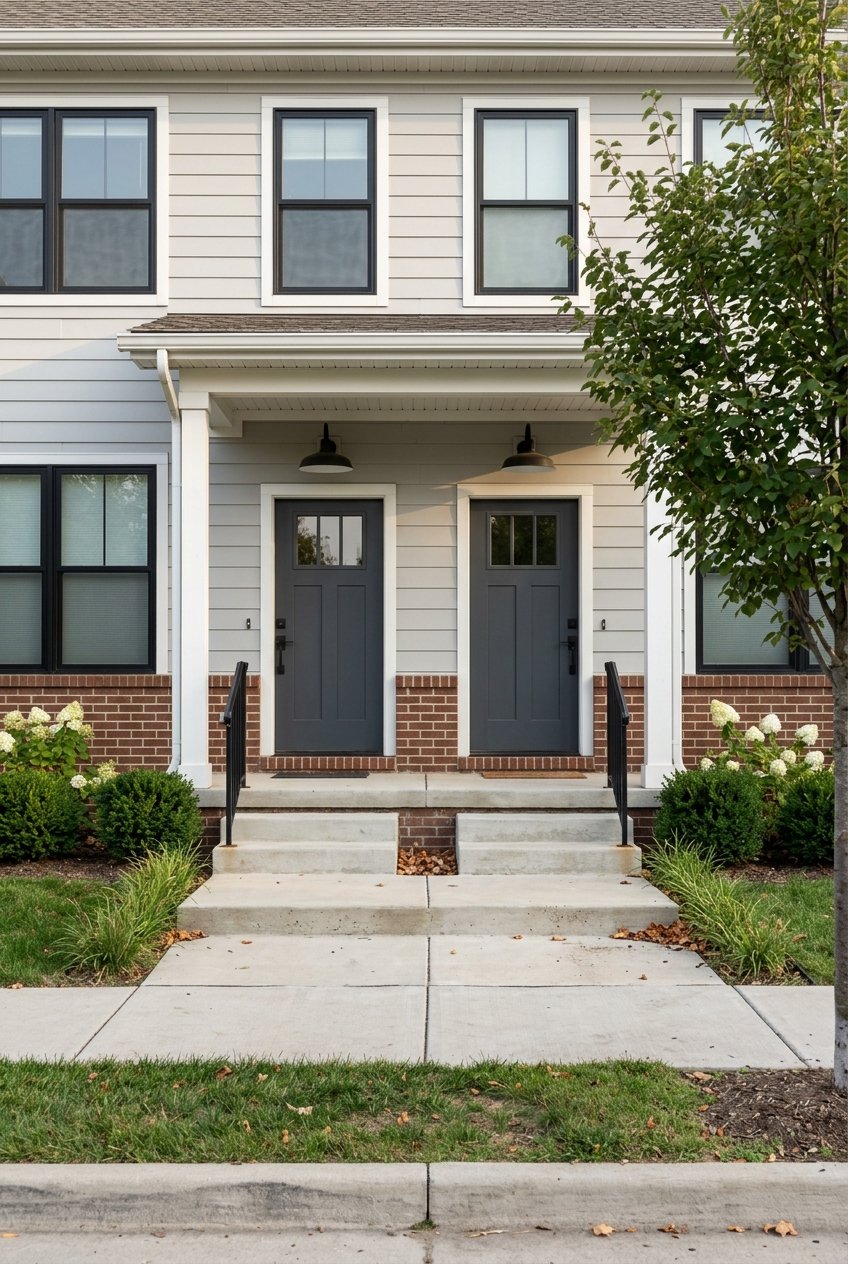
Trying to choose between a starter home and a duplex in Hanover, PA? You are not alone. For many first-time buyers, this decision comes down to one big question: do you want the simplest path to homeownership, or do you want a property that could help offset your monthly costs? In Hanover, both options can make sense, but they come with very different responsibilities. This guide will help you compare the tradeoffs, understand the local rules, and decide which path fits your goals best. Let’s dive in.
Why this choice matters in Hanover
Hanover gives first-time buyers a market that feels competitive but still within reach for many households. Census QuickFacts for Hanover Borough show a mixed housing profile, with a 53.4% owner-occupied housing unit rate, a median owner-occupied home value of $212,800, and a median gross rent of $1,137. That mix matters because it means both owner-occupied homes and rental properties are part of the local housing conversation.
Recent market data also shows a wide but useful pricing range. Redfin reported a March 2026 median sale price of $255,000, with homes selling in about 31 days and getting around 4 offers on average. Zillow’s Hanover home value index came in higher at $291,772 and said homes go pending in about 21 days, which is a reminder that different data sources measure the market differently.
For duplex buyers, pricing may be more approachable than you expect. Current Hanover duplex and triplex listings show examples around $219,900, $235,000, $249,900, $275,000, and roughly $389,000 to $399,000. That overlap with the broader market is one reason some buyers seriously compare a duplex with a traditional starter home.
What a starter home offers
A starter home is usually the more straightforward first purchase. You buy one property for your own household, manage your own maintenance, and avoid the added work of being a landlord. For many buyers, that simplicity lowers stress and makes the whole experience easier to handle.
A starter home may also give you a broader resale audience later. In general, a standard owner-occupied home appeals to more buyers than a duplex because the next owner does not need to want rental income or a multi-unit setup. If you think you may move again in a few years, that wider appeal can be worth considering.
In Hanover, a simpler property type can also mean fewer local compliance layers. You still need to budget for repairs and upkeep, of course, but you are not automatically stepping into rental registration or tenant-related obligations. If your main goal is to become a homeowner without adding extra moving parts, a starter home often checks that box.
What a duplex offers
A duplex gives you flexibility that a starter home usually cannot. If you live in one unit and rent the other, the rent may help offset part of your housing costs. For a buyer focused on monthly affordability, that can be a powerful advantage.
Financing options can support that strategy. FHA financing can be used on 1- to 4-unit owner-occupied properties with down payments as low as 3.5%. Freddie Mac also supports 2- to 4-unit owner-occupied primary residences, and its guidance says rental income from the other unit can be considered when calculating income and debt-to-income ratios.
That said, a duplex is not just a home with a bonus check attached. It is also a property where you may need to manage tenants, maintenance for two units, turnover, and local rental requirements. The income side is real, but so is the work.
Hanover zoning can shape your decision
In Hanover Borough, zoning is a key part of this choice. The borough adopted a new zoning ordinance on January 28, 2026, and buyers are directed to the borough’s interactive zoning map to verify allowed uses for a specific parcel. That means a duplex is not just a price decision. It is also a location and zoning decision.
This is especially important if you are thinking about buying a single-family home now and converting it later. Hanover notes that converting an existing single-family dwelling into a duplex requires a special exception and must meet minimum size, parking, and area and bulk requirements. In other words, a future conversion may be possible in some cases, but you should never assume it will be easy or automatic.
If you are comparing properties, it helps to separate two questions. First, is the property already a legal two-family use? Second, if it is not, does the parcel and structure appear capable of meeting the borough’s rules? Those answers can quickly narrow your options.
Rental rules are part of duplex ownership
If you buy a duplex in Hanover and rent one unit, local rental rules matter right away. Effective January 1, 2025, all residential rental units, tenants, and residential rental property owners in Hanover Borough must be registered annually. The fee is $35 per rental unit.
There is also an extra step for some owners. If a rental property owner lives more than 40 miles outside the borough, the borough requires a designated agent. That may not affect every buyer, but it shows that duplex ownership includes administrative responsibilities beyond the mortgage payment.
This is one of the biggest practical differences between a starter home and a duplex. A starter home is mainly about your own household. A duplex adds an ongoing compliance role that you need to be ready to handle.
Property maintenance matters more with a duplex
Hanover Borough’s code enforcement team actively monitors property maintenance, solid waste issues, nuisances, junked or abandoned vehicles, dangerous structures, and grass and weeds, among other health and safety concerns. Those standards matter for any homeowner, but they become more important when you own a property with a rental unit.
Why? Because you are not just maintaining your own living space. You are responsible for the property as a whole, and problems can affect both your household and your tenant. More doors, more systems, and more occupants often mean more coordination.
If you prefer a lighter maintenance load, a starter home may feel more manageable. If you do not mind a more hands-on role and you like the idea of building in some rental flexibility, a duplex may still be worth it.
Understand landlord responsibilities in Pennsylvania
If you are considering a duplex, it helps to think beyond the purchase and into daily ownership. According to the Pennsylvania Attorney General, every lease includes an implied warranty of habitability. That means a landlord must keep the unit fit and habitable and address serious defects that affect safety or livability.
The same state guidance also outlines important security deposit rules. In the first year, the security deposit cannot exceed two months’ rent. In the second year, it cannot exceed one month’s rent, and after move-out the landlord generally has 30 days to return the deposit or provide an itemized statement of damages.
These rules are not meant to scare you away from duplex ownership. They are meant to show that rental income comes with real obligations. If you want the benefits of a duplex, you should be comfortable acting as a landlord and budgeting time and money for that role.
Compare the monthly math carefully
A duplex can look attractive because rental income may help with qualifying and monthly payments. But the true cost picture is wider than the mortgage alone. You also need to factor in taxes, insurance, maintenance, repairs, and the possibility of vacancy.
Hanover Borough’s 2026 budget shows a municipal tax rate of 6.65 mills, with county and school taxes layered on top. That does not mean a duplex is a bad deal. It simply means rental income should be viewed as one piece of the budget, not a shortcut that makes other ownership costs disappear.
A starter home usually gives you a cleaner monthly picture. A duplex may offer more upside, but only if you are realistic about the extra expenses and occasional unpredictability that can come with a tenant-occupied property.
Resale looks different for each option
A starter home is usually the more universal product on resale. Many future buyers will be looking for a home they can move into and use as a standard primary residence. That broad appeal can support a smoother resale path.
A duplex can still resell well, but the buyer pool is often narrower. The next buyer usually needs to want rental income, owner-occupied multi-unit living, or a similar setup. With only 5 active duplex or triplex listings currently visible in Hanover, the inventory is limited, and that can make duplex resale feel more specialized.
That does not mean duplexes are harder to sell in every case. It means you should think about your likely exit strategy before you buy. If flexibility and income matter more to you than broad resale appeal, a duplex may still be the better fit.
Starter home vs. duplex at a glance
| Option | Best fit for you if... | Main tradeoff |
|---|---|---|
| Starter home | You want a simple first purchase with fewer administrative duties | No rental income from a second unit |
| Duplex | You want owner-occupied housing with rental income potential | Landlord duties, registration, and more complex ownership |
| Conversion candidate | You want to explore creating a duplex in the future | Must verify zoning, special exception, parking, and size requirements |
How to decide which path fits you
If you are still unsure, start with your comfort level, not just the price tag. Ask yourself whether you want your first home to be mainly a place to live or a place to live and manage as a small rental property. Your answer will often point you in the right direction faster than a spreadsheet alone.
A starter home may be the better fit if you want:
- A simpler buying process
- Fewer day-to-day responsibilities
- A more predictable ownership experience
- A property type with broad resale appeal
A duplex may be the better fit if you want:
- A chance to offset costs with rent
- Flexibility in how you use the property
- A path into owner-occupied multi-unit ownership
- A hands-on role that includes landlord duties
A future conversion may be worth discussing only if:
- The parcel is zoned appropriately
- The property can meet parking and size rules
- You are prepared for the borough’s special-exception process
The right choice depends on your budget, your personality, and how involved you want to be after closing. If you want help weighing specific Hanover properties, zoning questions, or the real monthly cost of each option, Nick Bostic - PA Realtor can help you compare homes with clear, local guidance and a strategy built around your goals.
FAQs
Is a duplex in Hanover, PA always more expensive than a starter home?
- No. Current Hanover duplex and triplex listings show prices that overlap with the lower and middle parts of the local market, including examples around $219,900 to $275,000, with some higher-priced listings as well.
Can you use owner-occupied financing for a duplex in Hanover, PA?
- Yes. FHA can be used for 1- to 4-unit owner-occupied properties, and Freddie Mac also supports 2- to 4-unit owner-occupied primary residences, with some rental income from the other unit potentially considered in qualifying.
What rental registration rules apply to a Hanover, PA duplex?
- If the property is rented, Hanover Borough requires annual registration of residential rental units, tenants, and owners, with a $35 fee per rental unit.
Can you convert a single-family home into a duplex in Hanover, PA?
- Possibly, but you should not assume it is allowed. Hanover Borough says a single-family-to-duplex conversion requires a special exception and must meet minimum size, parking, and area and bulk requirements.
Is a starter home or duplex easier to manage in Hanover, PA?
- A starter home is usually easier to manage because you avoid tenant issues, rental registration, and the added maintenance and administrative work that can come with a duplex.
What should first-time buyers compare when choosing between a starter home and duplex in Hanover, PA?
- Focus on your budget, comfort with landlord responsibilities, zoning for the specific property, likely maintenance needs, local rental compliance, and your long-term resale or move-up plans.